Dinosaur Discoveries
Pterodactyl vs Pteranodon: What’s the Difference?
And why we still have a soft spot for the Pterodactyl
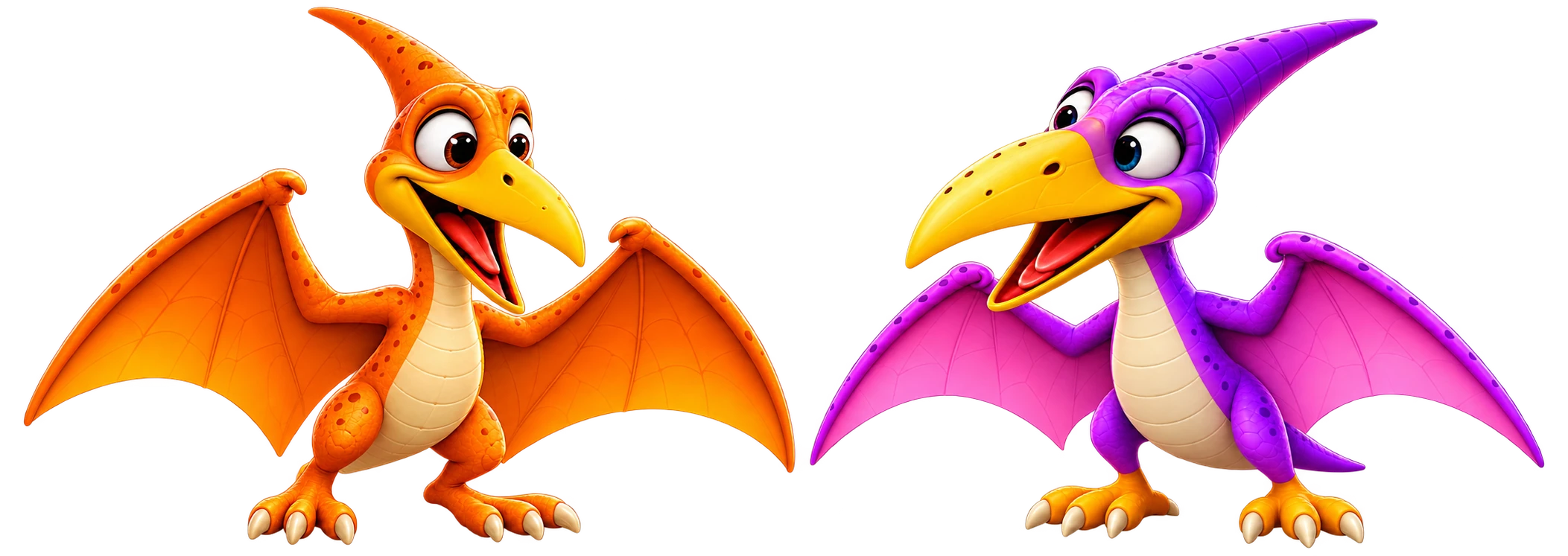
If you grew up in the 1980s or 1990s and somebody asked you to name the flying dinosaur, there’s a good chance you would have shouted:
“Pterodactyl!”
T-Rex was the big one.
Triceratops had the three horns.
Stegosaurus had the plates.
And Pterodactyl was the one that flew.
Simple.
Except, as many dinosaur-loving parents have probably discovered while reading books with their children today, there’s another name that seems to appear everywhere:
Pteranodon.
So what happened?
Were we taught the wrong name as children? Has the Pterodactyl disappeared? And are Pterodactyls and Pteranodons actually the same thing?
The answer is a little more interesting.
First things first: neither of them was actually a dinosaur
Here’s a fact that might shake a few childhood memories.
Pterodactyls and Pteranodons were not dinosaurs.
They were pterosaurs — flying reptiles that lived alongside the dinosaurs.
Pterosaurs were an enormous and varied group of animals that ruled the prehistoric skies for millions of years. Some were relatively small, while others developed truly enormous wingspans.
So when we casually call them “flying dinosaurs”, a palaeontologist might correct us.
But we all know what we mean.
So what is a Pterodactyl?
This is where things get slightly confusing.
The word pterodactyl has been used for generations as a general name for prehistoric flying reptiles.
It is a familiar nickname rather than one precise name for every prehistoric flyer.
The smaller Jurassic flying reptile originally associated with that nickname was very different from the giant, crested flyers many of us picture.
It also had teeth.
So the classic creature many of us remember from toys, cartoons and dinosaur books wasn’t necessarily that smaller Jurassic flyer at all.
“Pterodactyl” had simply become the name everybody knew.
And what is a Pteranodon?
Pteranodon lived later, during the Late Cretaceous Period.
It had a large wingspan, a long beak and that unmistakable crest sweeping backwards from its head.
Unlike the smaller toothed Jurassic flyer behind the familiar Pterodactyl nickname, Pteranodon had no teeth.
That familiar image of a large flying reptile soaring above the dinosaurs with a long beak and impressive head crest?
Very often, what you’re actually looking at is a Pteranodon.
So why did we all call them Pterodactyls?
Because Pterodactyl became the name that stuck.
For generations of children, it was the easy, recognisable word for the prehistoric creature in the sky.
It appeared in toys, television, films, books and playground conversations.
Once a name becomes part of popular culture, it can be remarkably difficult to replace.
Today, children’s dinosaur books, museums and educational programmes tend to use more specific names.
Children are therefore much more likely to encounter Pteranodon, alongside names such as Quetzalcoatlus and other individual pterosaurs.
We’re simply becoming more specific about which prehistoric flying reptile we’re actually talking about.
So which one should we teach our children?
Both.
And that’s part of the fun.
If your child points at a flying prehistoric reptile and calls it a Pterodactyl, you don’t need to sound an alarm.
You can simply say:
“Do you know, lots of people call them Pterodactyls. But that one might actually be a Pteranodon.”
Suddenly, a familiar childhood name has become the beginning of another little discovery.
And that’s exactly the sort of learning we love.
So why do we use Pterodactyls in My Dinosaur Universe?
This bit was deliberate.
Throughout the My Dinosaur Universe stories, we want children to encounter real prehistoric names and start becoming familiar with them.
Triceratops.
Stegosaurus.
Spinosaurus.
Ankylosaurus.
There are already plenty of enormous prehistoric words for little readers — and occasionally their parents — to get their tongues around.
So for our flying friends, we decided to keep a name that many mums, dads and grandparents already recognise:
the Pterodactyls.
Is it the most scientifically precise label for every flying reptile?
No.
But there’s something wonderfully nostalgic about it.
For many parents reading our stories, Pterodactyl takes you straight back to childhood. To dinosaur toys scattered across the carpet. To old books from the library. To cartoons, museum visits and trying to remember how on earth you were supposed to pronounce all those dinosaur names.
And that matters to us too.
Because My Dinosaur Universe isn’t only about creating memories for children.
Sometimes we want it to bring a few childhood memories back for the grown-ups reading alongside them.
A little bit of nostalgia. A little bit of learning.
So yes, you’ll hear us talking about our Pterodactyls.
And now, if your little dinosaur expert corrects you and proudly announces:
“Actually, that’s a Pteranodon!”
You can smile and tell them they’re right.
Then you can explain that when you were their age...
we called nearly all of them Pterodactyls.
And somehow, we survived.
Dino fact: Pterodactyl vs Pteranodon
Pterodactyl
The familiar nickname, originally associated with a smaller Jurassic flyer.
- A pterosaur
- Lived during the Jurassic
- Had teeth
- Smaller than the classic giant “Pterodactyl” many people imagine
Pteranodon
- A pterosaur
- Lived during the Late Cretaceous
- Had no teeth
- Famous for its long beak and large head crest
And neither one was technically a dinosaur!
Keep discovering with My Dinosaur Universe
Meet our supporting flying friends alongside the dinosaurs in our rhyming dinosaur picture books for ages 2 to 7. Start with Dinosaur Disco, discover Anky’s Dinosaur Bedtime adventure, or explore why T-Rex chose to dance by himself.
For more dinosaurs to recognise, explore our dinosaur facts and spotter guide for kids.
For more about the science of these prehistoric flyers, visit the Natural History Museum’s guide to pterosaurs.
Back to all articles